EAR (HUMAN)
The Ear
- Outer Ear:
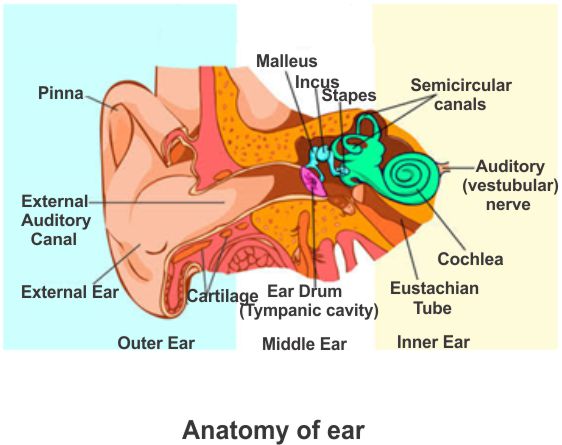
- The outer ear, including the pinna and external auditory meatus, collects sound waves from the environment.
- The pinna directs these sound waves into the ear canal, which leads to the tympanic membrane (eardrum).
- Fine hairs and wax-secreting glands in the pinna and ear canal help protect the ear from foreign particles.
- Middle Ear:
- This section contains three small bones called ossicles (malleus, incus, stapes), which form a chain-like structure.
- The ossicles transmit and amplify sound vibrations from the tympanic membrane to the inner ear.
- The Eustachian tube connects the middle ear to the back of the throat, helping to regulate air pressure and drain fluids from the ear.
- Inner Ear:
- The inner ear consists of the bony labyrinth, which contains fluid-filled channels, and the membranous labyrinth, which houses the sensory structures responsible for hearing and balance.
- The cochlea, a coiled structure within the bony labyrinth, is involved in hearing.
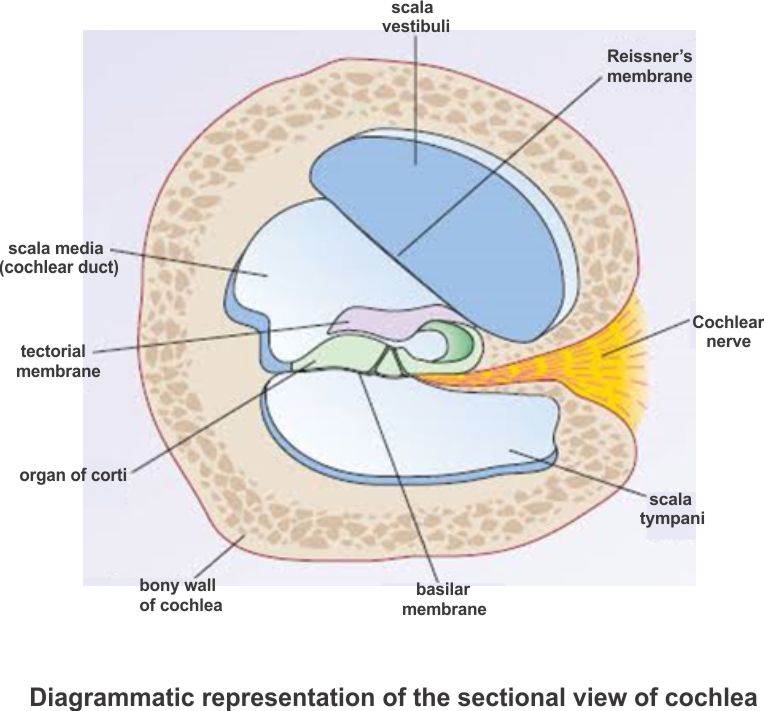
- The organ of Corti, located within the cochlea, contains specialized hair cells that detect sound vibrations and convert them into electrical signals sent to the brain.
- The vestibular apparatus, including the semi-circular canals and otolith organs (macula), is responsible for detecting changes in head position and movement, helping to maintain balance and orientation.
Mechanism of Hearing:
- Sound Reception: Sound waves are received by the external ear, including the pinna and ear canal, which directs them towards the eardrum (tympanic membrane).
- Transduction of Sound Waves: When sound waves strike the eardrum, it vibrates in response to these vibrations. The vibrations are then transmitted through the three small bones of the middle ear (malleus, incus, stapes) to the oval window.
- Transmission to Cochlea: The vibrations pass through the oval window and enter the fluid-filled cochlea, a spiral-shaped structure in the inner ear. Here, the vibrations create waves in the lymph fluid within the cochlea.
- Stimulation of Hair Cells: The waves in the lymph fluid cause a ripple in the basilar membrane, which bends the hair cells within the organ of Corti. These hair cells are specialized sensory receptors for hearing.
- Generation of Nerve Impulses: As the hair cells are bent, they press against the tectorial membrane, leading to the generation of nerve impulses in the associated afferent neurons. These impulses represent the auditory information detected by the ear.
- Transmission to Auditory Cortex: The nerve impulses are carried by the auditory nerves to the auditory cortex of the brain, located in the temporal lobe. Here, the impulses are analyzed and processed, allowing us to perceive and recognize the sound.